


Wesley Family Services knows that gap well. The organization runs 30 group homes across western Pennsylvania, serving adults diagnosed with intellectual and developmental disabilities (IDD) or autism.
They have a dedicated staff, and some homes run double coverage overnight. There are bed checks throughout the night, but like most residential homes, Wesley Family Services’ direct care staff aren’t nurses, so those checks are mostly about safety.
There can be a period during the night when physiological changes may go unnoticed. That’s the gap they set out to close with the Neteera System, a continuous, contactless patient monitoring system that tracks heart rate and respiratory rate without wearables, cameras, or anything for residents or staff to manage.
A Deliberate Monitoring Rollout
Wesley didn’t flip the system on for all 30 homes at once. The team started with three pilot homes and built the pieces that would make the rollout work before turning any sensors on: consent from residents, guardians, and physicians; training for every on-call supervisor, remote support staff, and site team; and a clear workflow so everyone knew their role the moment an alert came in.
Once training was complete and the response workflow was in place, Wesley turned on continuous monitoring at the three pilot homes.
The Night the Numbers Told a Different Story
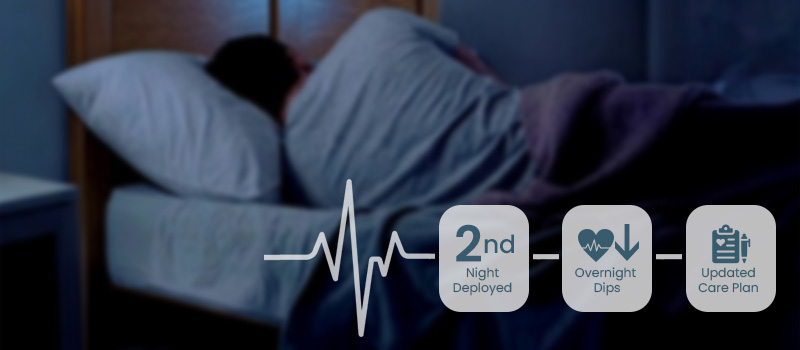
On just the second night the system was live, the Neteera System showed a resident’s heart rate dropping. His heart rate baseline was already lower than what’s typical for the rest of the home’s population. That night, it dropped further several times. Without Neteera’s continuous tracking, these shifts would likely not have been noted.
The team’s thoughtfully constructed workflow worked exactly as planned. The remote support team shared the heart rate dips with the home’s on-site manager, who checked on the resident directly, tracking his heart rate throughout the morning to see whether it matched what the system showed. It did. Concerned, she took him to his primary care physician.
The visit surfaced something the care team hadn’t been aware of: the resident has a heart condition his physician knew about, but it had never been included in a documented plan for his residential care team.
From Awareness to a Documented Care Plan
Overnight monitoring still comes down to what the care team does with it, and the Wesley Family Services team didn’t stop at the PCP visit.
The resident was scheduled with a cardiologist, and within days the team had a risk mitigation plan in place. Per the doctor’s orders, if the resident’s heart rate falls below the specified rate, staff call 911 immediately. That protocol is being added to his Individual Support Plan (ISP), so it travels with him.
Remote support staff know it. On-site staff know it. On-call supervisors know it. His support coordinator is adding it to the plan. Everyone responding to an alert about this resident now works from the same information, regardless of who’s on shift.
Before the doctor-defined alert threshold was in place, overnight heart rate dips below the resident’s usual range might have meant multiple wellness checks. Now that the clinical escalation point is documented, staff aren’t waking him repeatedly for readings that don’t require it. That’s not a small thing.
Sleep disruption isn’t neutral, especially for someone with IDD or autism, where a broken night can affect mood, behavior, and health the next day. A documented threshold means he’s only woken when it’s actually warranted, not every time a reading dips below what’s typical for him. Remote support still monitors every night and provides a daily shift note, so the record continues, but the response and the disruption to his rest are proportional to what’s actually happening.