Enhance
Post-Acute
Recovery With
Patient Monitoring
Neteera’s advanced monitoring technology enables post-acute caregivers to detect deterioration early, respond faster, and accelerate patient recovery.
Enhance
Post-Acute
Recovery With
Patient Monitoring
Neteera’s advanced monitoring technology enables post-acute caregivers to detect deterioration early, respond faster, and accelerate patient recovery.
Long-Term Care • Skilled Nursing • Hospice • Home Health Care
Assist Healing, Recovery, and Transition With Patient Monitoring
![]()
Heart Rate & Pattern Analysis
![]()
Inhale/Exhale Ratio
Motion & Position
![]()
Respiration Rate & Depth
Sleep Analysis
Exit, Frequency & Occupancy

What’s possible with Neteera:
Optimize staffing
Reduce emergency transfers
Detect fall risks
Manage higher acuity patients
Improve quality ratings
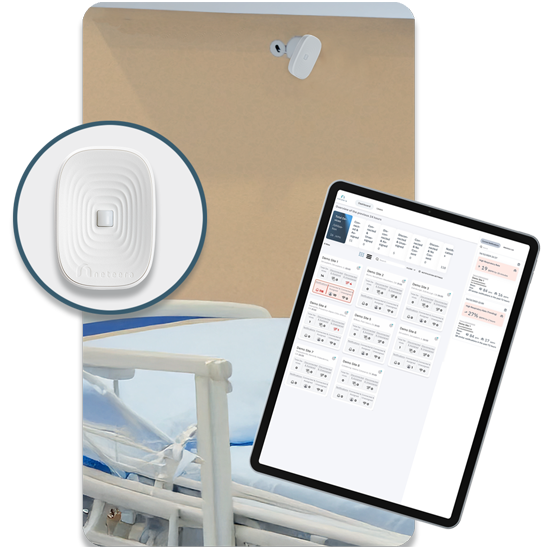
Contactless connection. Extensive patient data.
• Real-time vital and activity data
• Centralized dashboard
• Smart alerts tailored for each patient
• AI-driven trend analysis
• Protects patient privacy and comfort
Patient Monitoring for Post-Acute Settings
LONG-TERM CARE
- Build stronger resident connections: Allocate more time to support and strengthen resident relationships through earlier interventions aided by timely medical monitoring.
- Reduce emergency incidents: Minimize urgent situations and hospital admissions by continuously monitoring vital signs and movement.
- Personalize care: Manage health and support a focus on resident interaction with insights that assist in delivering proactive and individualized care.
- Reduce falls: Monitor bed exit and movement with customized alerts to notify staff when the healthcare team detects a fall risk or concerning mobility change.
SKILLED NURSING
- Identify health issues quickly: Detect and address concerning patterns or changes in patient health data with continuous, real-time monitoring.
- Reduce complications: Minimize the potential for health issues to escalate through a proactive, around-the-clock monitoring approach.
- Enhance patient trust: Implement contact-free monitoring to promote and prioritize patient comfort.
- Optimize staff workflow: Allocate resources more efficiently by reducing the time spent manually collecting patient vital sign measurements.
HOSPICE
- Give families peace of mind: Use accurate, consistent monitoring to detect health changes sooner so that families can be present during the final moments.
- Increase treat-in-place care: Improve on-site symptom management with patient health data insights to ensure patients remain in a comfortable environment
- Pain-free transition support: Proactively manage symptoms using trend and pattern data to help minimize patient discomfort during end-of-life care.
- Preserve patient dignity: Prioritizes patient comfort and privacy with discreet, non-intrusive monitoring.
HOME HEALTH CARE
- Monitor in real time: Access continually current patient heart rate, respiratory rate, and activity data for timely care.
- Enhance care prioritization: Identify individual patient needs by utilizing continuous health data to help staff focus on where care is most needed.
- Enable virtual triage: Improve remote assessment and decision-making with critical health measurements, tailored notifications, and AI-driven insights.
- Increase care accessibility: Reduce travel requirements for clinicians and remotely monitor patients in rural and underserved areas.
- Achieve CMS Home Health Quality Measures: Elevate performance on Centers for Medicare & Medicaid Services (CMS) measures for patient ratings and Home Health Consumer Assessment of Healthcare Providers and Systems (HHCAHPS).
Patient Monitoring for Post-Acute Settings
LONG-TERM CARE
- Build stronger resident connections: Allocate more time to support and strengthen resident relationships through earlier interventions aided by timely medical monitoring.
- Reduce emergency incidents: Minimize urgent situations and hospital admissions by continuously monitoring vital signs and movement.
- Personalize care: Manage health and support a focus on resident interaction with insights that assist in delivering proactive and individualized care.
- Reduce falls: Monitor bed exit and movement with customized alerts to notify staff when the healthcare team detects a fall risk or concerning mobility change.
SKILLED NURSING
- Identify health issues quickly: Detect and address concerning patterns or changes in patient health data with continuous, real-time monitoring.
- Reduce complications: Minimize the potential for health issues to escalate through a proactive, around-the-clock monitoring approach.
- Enhance patient trust: Implement contact-free monitoring to promote and prioritize patient comfort.
- Optimize staff workflow: Allocate resources more efficiently by reducing the time spent manually collecting patient vital sign measurements.
HOSPICE
- Give families peace of mind: Use accurate, consistent monitoring to detect health changes sooner so that families can be present during the final moments.
- Increase treat-in-place care: Improve on-site symptom management with patient health data insights to ensure patients remain in a comfortable environment
- Pain-free transition support: Proactively manage symptoms using trend and pattern data to help minimize patient discomfort during end-of-life care.
- Preserve patient dignity: Prioritizes patient comfort and privacy with discreet, non-intrusive monitoring.
HOME HEALTH CARE
- Monitor in real time: Access continually current patient heart rate, respiratory rate, and activity data for timely care.
- Enhance care prioritization: Identify individual patient needs by utilizing continuous health data to help staff focus on where care is most needed.
- Enable virtual triage: Improve remote assessment and decision-making with critical health measurements, tailored notifications, and AI-driven insights.
- Increase care accessibility: Reduce travel requirements for clinicians and remotely monitor patients in rural and underserved areas.
- Achieve CMS Home Health Quality Measures: Elevate performance on Centers for Medicare & Medicaid Services (CMS) measures for patient ratings and Home Health Consumer Assessment of Healthcare Providers and Systems (HHCAHPS).
Ready to transform
patient monitoring in your environment?
Take the next step and request a demo today.