What Changed Since the Last Visit?

Go from a snapshot to days of trends.

The Neteera System shows you how patients are doing between appointments.

Primary Care • Pulmonology • Cardiology • Palliative Care

Hands-Free Remote Patient Monitoring

Heart Rate

Position Change

Motion
Respiratory Rate
Sleep

Exit Detection
What Neteera Can Mean for Your Practice

  • Make every consult more efficient
  • Spot decompensation between visits
  • Reach out to the right patients first
  • Bring objective data to value-based contracts
  •  Set your services apart for facility partners
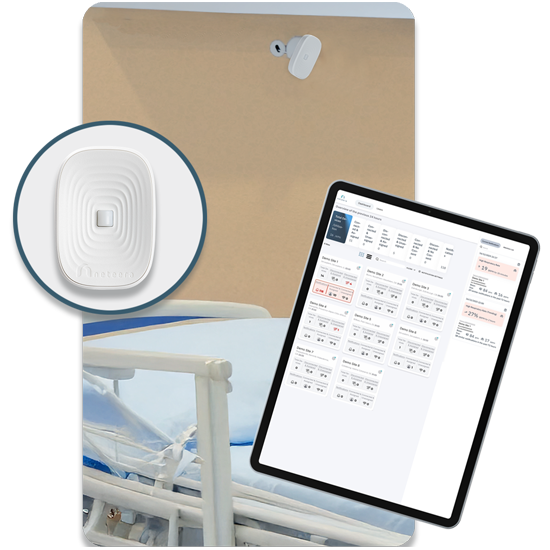
The Neteera sensor mounted over a patient's bed measures vital signs and sends the data to the HealthGate dashboard on a tablet.

From the patient to your screen.

• Continuous vital signs and activity data
• Centralized dashboard
• Trend analysis that shows change over time
• Trend history for each patient
• No wearables, cameras, or microphones

Patient Monitoring for Your Specialty

Doctor consults with patient during in office visit.

PRIMARY CARE

  • See who needs a call: Trend data can show which patients are changing, so outreach happens where it matters.
  • Add context to follow-ups: Heart rate and respiratory rate trends give each appointment more to go on.
  • Remove the adherence problem: Patients have nothing to wear, charge, or remember.

PULMONOLOGY

  • Watch respiratory rate trends: Continuous data can show changes between appointments, so you can decide when to follow up.
  • Add to your current tools: Respiratory rate trends add context to oxygen saturation and spirometry results.
  • Get an overnight view: Overnight respiratory rate data adds a view that office visits can’t provide.
Male pulmonologist shares respiratory rate data from continuous monitoring with male patient during an office visit.
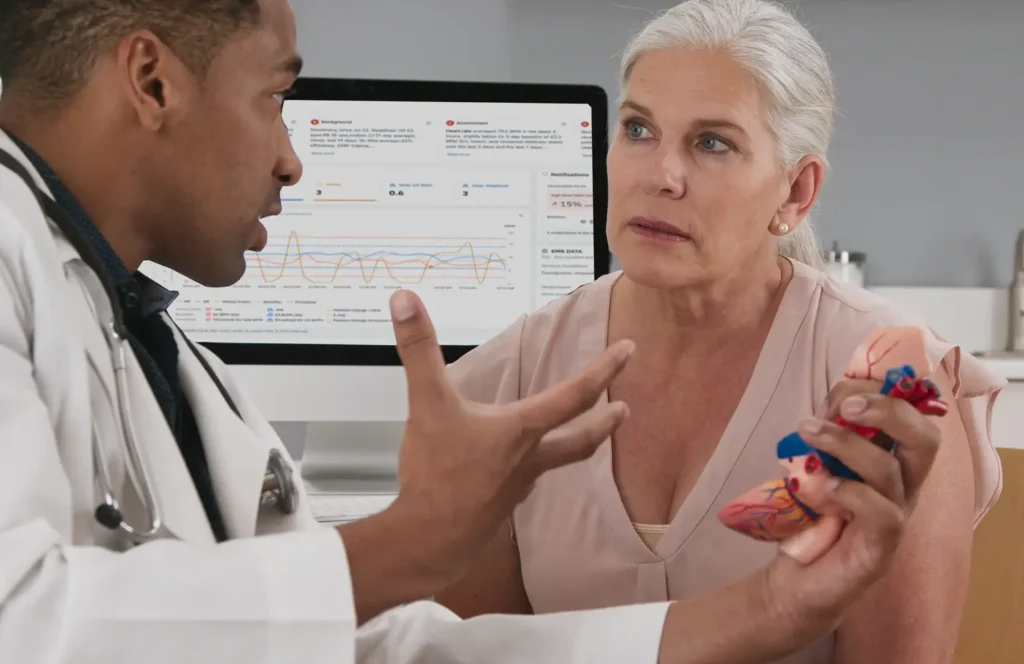
Cardiologist holds an anatomical presentation of the heart as he talks with his female patient in-office.

CARDIOLOGY

  • Follow heart rate trends: Continuous heart rate data shows day-to-day changes between visits.
  • Add respiratory context: Respiratory rate trends alongside heart rate give a fuller view between visits.
  • Nothing to apply: Contactless heart rate monitoring means no patches, straps, or charging.

PALLATIVE CARE

  • Monitor without disturbing: Nothing touches the patient, so monitoring doesn’t interrupt rest.
  • Notice changes sooner: Heart rate and respiratory rate trends can show when a patient’s condition is shifting.
  • Keep families informed: Objective trend data gives your team something concrete to share with families.
Female hospice nurse explains what the data is showing as she meets with an elderly woman in her home.

Part of an ACO?

See how ACO patient monitoring supports participating practices.

See What Continuous Awareness Looks Like in Your Practice

Take the next step and request a demo today.