


Shift change in a skilled nursing facility (SNF), post-acute unit, or long-term care (LTC) community runs on a tight clock and a full resident list, no matter which format your unit uses to pass it along. Improving that handoff can be done without expecting anyone to work faster. It means giving your team a way to catch the residents who aren’t on anyone’s radar yet, not just organizing the ones who already are.
The resident list nurses work from usually defaults to alphabetical order or room number, not clinical urgency, so whoever’s reviewing it still has to work out who needs a closer look first. Most facilities give staff a narrow overlap window to pass along a full unit’s worth of information. Add in a nurse covering 30 to 40 residents, and there’s little time to spare on a list that treats every resident the same.
Nurses are already trained to prioritize a resident everyone knows is unstable, regardless of where that resident falls on the roster. The bigger risk is the resident who isn’t on anyone’s radar yet: someone whose numbers still fall in a normal range but who’s quietly drifting from what’s normal for them. Even the sharpest clinical instinct can’t flag a change that hasn’t been measured or doesn’t look unusual on its own.
That gap isn’t about nursing skill. It’s structural, and it shows up in a handful of predictable ways across SNF, post-acute, and LTC care.
Why Shift-to-Shift Handoff Breaks Down
Having a clean, complete handoff every shift is hard, no matter how good your team is. Research shows it breaks down because of poor communication, interruptions, and a lack of standardized processes, the most common culprits across nursing broadly. A few things make that especially tough to manage in long-term care, SNF, and post-acute settings:
High cognitive fatigue | By the end of a long, physically demanding shift, it’s easy to forget to mention a subtle change in a resident’s baseline.
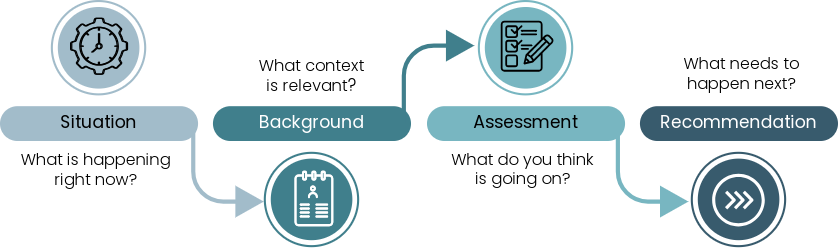
Little standardization | Many facilities still rely on unstructured notes, verbal summaries, or sticky notes, instead of an evidence-based format like SBAR (Situation, Background, Assessment, Recommendation).
Documentation that only flags what’s already changed | Most facilities chart by exception, documenting only when a resident’s status shifts from their baseline. It’s efficient, but it also means a change has to be noticeable enough for someone to catch and record before it shows up in the next report.
Information overload | Incoming staff gets flooded with data during group report, with little to set updates apart.
Environmental distractions | Alerts, call lights, and interruptions during reporting pull attention away from the handoff and raise the odds a detail gets skipped.
Cross-discipline gaps | Updates can get lost moving from therapy teams to nursing staff, or from nurses to certified nursing assistants (CNAs), especially when each group uses its own shorthand.
Delayed documentation | When clinical events get charted hours after they happen, the incoming shift is working from a record that’s already out of date.
This gap hits hardest for residents who can’t flag their own decline. Residents with dementia or other cognitive impairment often can’t say that something feels wrong, so catching a change depends on someone else noticing it and making sure that gets passed along at handoff.
On a floor where one nurse may cover 30 to 40 residents, a rushed or unstandardized handoff can put the entire burden of catching that change on memory, instinct, and whatever time is left before the next task.
Best Practices That Strengthen Any Shift Handoff
Nursing leaders who’ve made real headway on handoff quality tend to build in a few specific practices:
Standardize the format | Apply SBAR, or a similar structured format, for every verbal and written handoff, so nurses deliver the same categories of information the same way, every time.
Protect report time | Carve out a distraction-free window, even 15 minutes, during shift overlap, where staff handles only emergency call lights and holds everything else until the report is done.
Use targeted, warm handoffs for high-risk residents | Beyond the group report, follow up with a one-on-one verbal review for anyone with a recent fall, a new medication, or a behavioral change, so their update doesn’t get lost in the pace of group report.
Bring part of the handoff to the resident | A quick bedside check of the resident, their environment, and any equipment in use catches what a written note alone might miss.
Leave room for questions | A good handoff isn’t one-directional. Build in time for the incoming nurse to ask about anything unclear before report ends.
Give incoming staff a place to start | None of this works if nurses still have to guess which residents need attention first once report ends. A quick pre-report huddle, where the outgoing nurse flags the two or three residents who need eyes on them soonest, gives the incoming shift somewhere to start instead of guessing.
These practices close a lot of gaps. But they don’t flag a resident experiencing quiet changes that nobody’s noticed yet.
Where Automated Prioritization Fits In
Clinical efficiency during handoff doesn’t improve from making an already-known priority easier to find. Nurses handle that part well on their own, using the same acuity-based judgment they’re trained on for every shift. It comes from catching the resident nobody’s flagged yet: the one who looks stable on paper but has a subtle shift taking place days before it turns into a visible, unmistakable problem.
The Neteera System doesn’t look at just one reading in isolation. It continuously tracks heart rate, respiratory rate, and other physiological signals for each resident. It then compares that combination of signals to the resident’s own history, looking for patterns of change across all of them.
A single number that’s slightly off might not mean much on its own. Several signals shifting together, even in small ways, is often the earlier and more reliable sign that something has changed. When the system detects that kind of pattern, it triggers an Attention Notification and flags it in List view and on the resident’s chart.
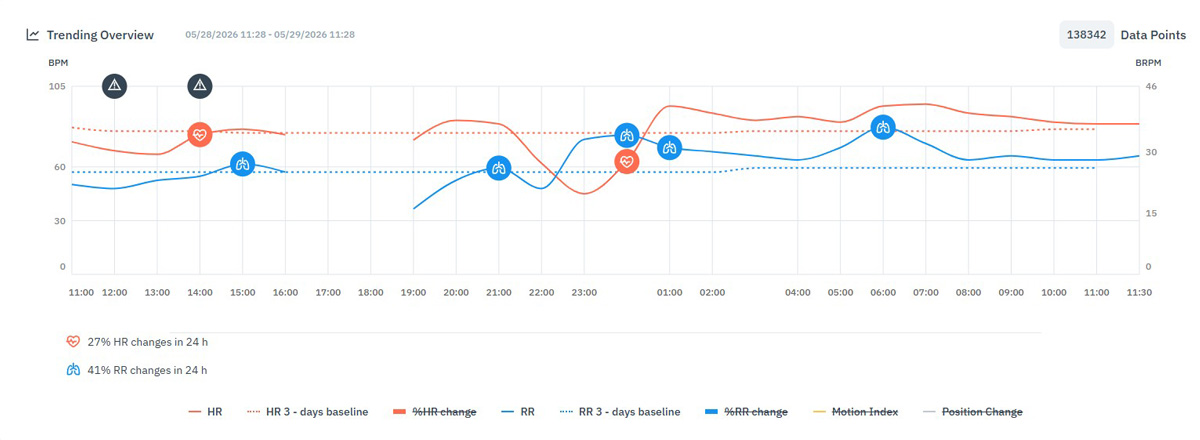
The Neteera HealthGate Patient Chart helps care teams identify patterns and changes that are relevant to an individual resident, not on the general population.
What gets automated is the flagging, not the judgment. The system doesn’t diagnose a resident or decide what to do about a change. It surfaces residents whose combined signals suggest a closer look may be warranted, then leaves the assessment to the nurse.
Priority attention sorting can be toggled on, so residents with an active Attention Notification automatically move to the top of the list. A resident who wouldn’t have stood out now gains first-look priority along with the ones already on a nurse’s radar.
Personalized Pattern Detection Catches What a Standard Handoff Misses
Two things make the Attention Notification different from a single reading in isolation. First, the comparison is personal: a reading that falls within a normal population range can still represent a meaningful shift for that specific resident, so the Neteera System compares each resident to their own history, not a population average.
Second, it’s not just one signal. The system weighs several signals together, so a small change in heart rate that wouldn’t mean much on its own can matter when it shows up alongside a similar shift in respiratory rate or another tracked signal. That combination is what a one-size-fits-all threshold or a single vital sign reading alone would miss. That comparison also comes with context. Hovering over an Attention Notification in List view or on the resident’s chart shows exactly what triggered it, so nurses aren’t left guessing why a resident moved to the top of the list.
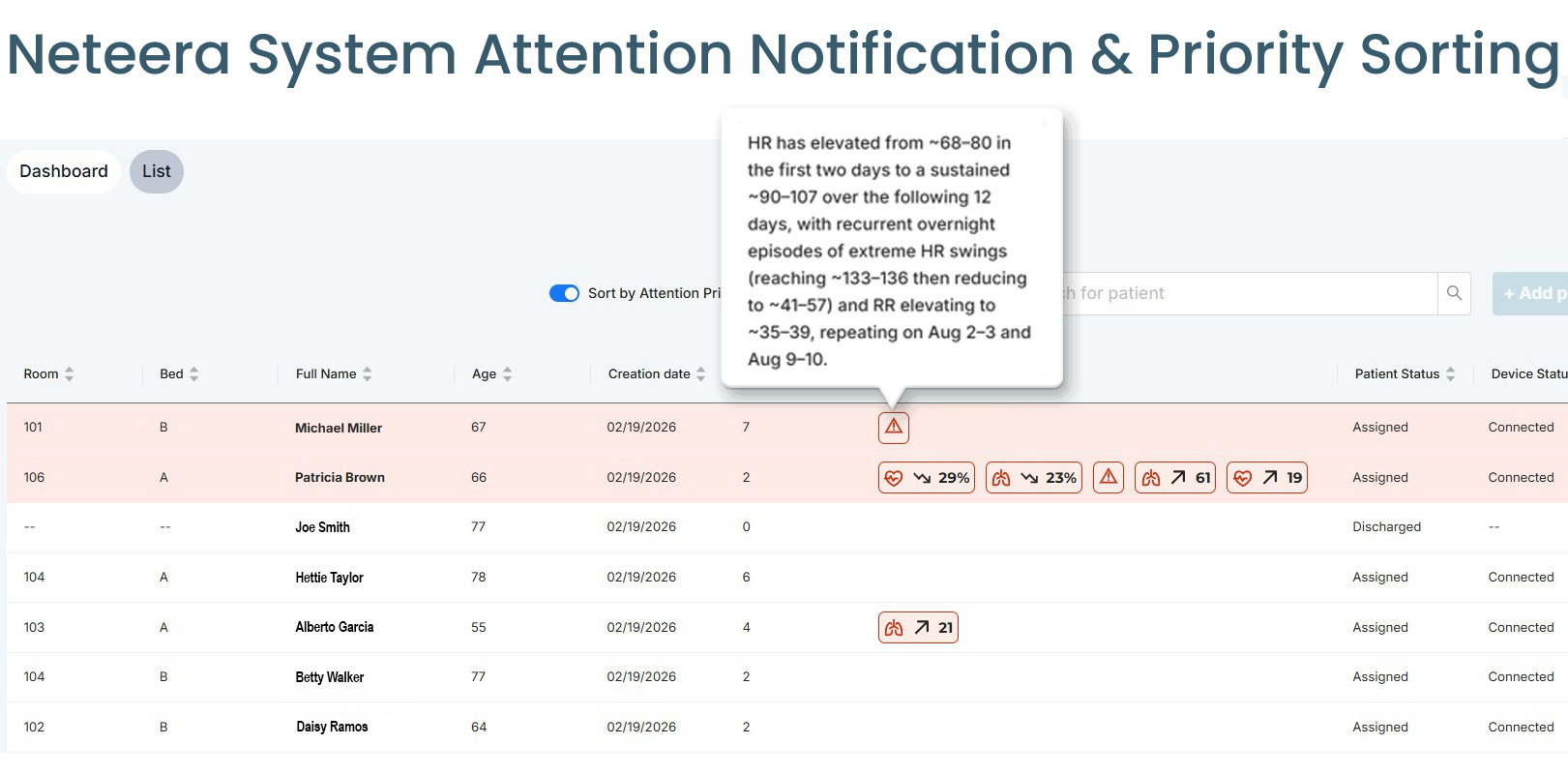
The Neteera System Attention Notification reflects a broad pattern of physiological change. Each notification also includes an explanation of the reasoning behind it, so your team can see which indicators drove the pattern and why the notification was raised.
For the incoming nurse, that difference plays out in the first few minutes of a shift. The census is already organized by who may need attention first. That prioritization continues to update, so it’s always up to date for the current shift nurse and whoever signs in next.
Building Automated Prioritization Into Your Shift Handoff Routine
Technology only improves the handoff if it’s part of the routine, not an extra step layered on top of it. The Attention Notification is designed to work alongside your facility’s existing protocols, not replace them.
Facilities benefit most from Neteera’s prioritization capabilities by building a quick review of the List sorted by Attention Priority and the Current Notifications sidebar directly into standard handoff, the same way they would review a Kardex, brain sheet, or handwritten notes. The outgoing nurse can point the incoming nurse to the residents with Attention Notifications, then use that shortlist to decide which residents get a targeted, warm handoff conversation and which can wait for the next round.
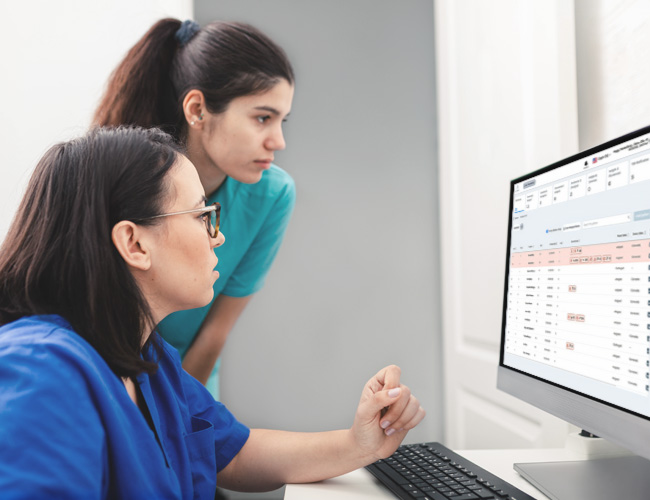
This automation works alongside scheduled assessments, physician rounds, and clinical judgment, supporting a nurse’s decision about what to do next.
Rethinking Shift Handoff for LTC, SNF, and Post-Acute Teams
Whether you run a long-term care community, a skilled nursing facility, or a post-acute care unit, the underlying problem is the same: staff are stretched thin, and an unsorted, unstandardized handoff can’t catch the resident who still looks stable but is already trending the wrong way.
Closing that gap isn’t about collecting more data. It’s about pairing a structured process with deeper insight when nurses need it most: the first few minutes of a shift.